
Imagine uploading a photograph, asking a question about it, and receiving a detailed spoken explanation. Or imagine showing an AI system a video and asking it to summarize everything happening in the scene.
This is the power of multimodal artificial intelligence.
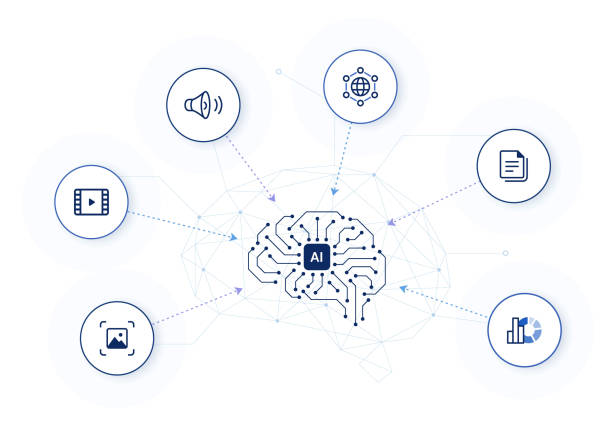
Traditional AI systems often focus on one type of information, such as text or images. Multimodal AI takes things further by allowing machines to understand and generate information across multiple formats, including text, images, audio, and video.
In this guide, we’ll explain how multimodal AI technology works, explore its major components, and discover how businesses and individuals can use it.
What Is Multimodal AI?
Multimodal AI is a type of artificial intelligence that can process, understand, and generate information using different data formats.
These formats are called modalities.
For example:
- Text: Written questions, documents, and instructions.
- Images: Photographs, diagrams, and graphics.
- Audio: Speech, music, and environmental sounds.
- Video: Moving images combined with visual and audio information.
A multimodal AI model can combine several of these inputs to produce a more context-aware response.
How Does Multimodal AI Technology Work?
Multimodal AI generally works through several connected stages.
1. Data Collection and Input
The process begins when a user provides information through text, images, audio, or video.
For example, you might upload a photograph of a restaurant menu and ask the AI to identify vegetarian dishes.
2. Data Encoding
Each type of information is converted into numerical representations that AI models can process.
Different encoders handle different modalities:
- Text encoders process words and sentences.
- Vision encoders analyze image features.
- Audio encoders process speech and sound.
- Video processing systems analyze frames and temporal information.
3. Feature Alignment and Fusion
The system connects information from different sources so that the model can understand how they relate.
For example, it can connect the spoken words in an audio recording with the objects visible in a video.
Techniques such as embeddings and attention mechanisms help models identify relationships between different modalities.
4. AI Reasoning and Processing
After combining the information, the model analyzes the context and determines an appropriate response.
It can identify objects, interpret instructions, summarize conversations, or answer questions about uploaded content.
5. Output Generation
Finally, the AI generates an appropriate result. Depending on its capabilities, the output might be text, an image, audio, or video.
Types of Multimodal AI Capabilities
| Capability | Example |
|---|---|
| Text to Image | Generate artwork from descriptions |
| Image to Text | Describe uploaded photographs |
| Speech to Text | Convert recordings into transcripts |
| Text to Speech | Create realistic voiceovers |
| Video to Text | Summarize video content |
| Text to Video | Generate videos from prompts |
| Audio and Vision | Understand spoken instructions alongside visual information |
Best Examples of Multimodal AI Technology
1. ChatGPT
Helps users interact with text, images, and voice through supported multimodal features.
Website: https://chatgpt.com/
2. Google Gemini
Supports multimodal interactions involving text, images, audio, video, and other supported inputs.
Website: https://gemini.google.com/
3. Claude
Supports image understanding and document-based analysis, making it useful for research and knowledge work.
Website: https://claude.ai/
4. Microsoft Copilot
Combines AI assistance with supported Microsoft productivity applications and visual capabilities.
Website: https://copilot.microsoft.com/
Real-World Applications of Multimodal AI
Multimodal AI is creating opportunities across many industries.
| Industry | Application |
|---|---|
| Education | Analyze diagrams and explain lessons |
| Healthcare | Assist with medical image analysis |
| Marketing | Generate images and promotional videos |
| E-commerce | Analyze product photographs |
| Customer Support | Understand voice messages and screenshots |
| Manufacturing | Analyze visual inspection data |
| Entertainment | Generate multimedia content |
Benefits of Multimodal AI
- Better context understanding: Combines information from different sources.
- Improved interaction: Allows users to communicate naturally.
- Creative possibilities: Supports text, image, audio, and video generation.
- Business productivity: Helps automate complex information-processing tasks.
- Flexible applications: Supports different industries and workflows.
Challenges and Limitations
Despite its advantages, multimodal AI still has limitations. Models can misunderstand images, misinterpret speech, or generate inaccurate information.
Other challenges include:
- High computing requirements.
- Data privacy concerns.
- Copyright and content ownership issues.
- Bias in training data.
- Difficulty verifying complex outputs.
Human review remains important, especially in healthcare, finance, and other sensitive fields.
What Is the Future of Multimodal AI?
The future of multimodal AI is moving toward more natural interactions between humans and machines.
We can expect continued improvements in real-time translation, video understanding, intelligent assistants, robotics, and personalized digital experiences.
As these technologies develop, AI systems will become increasingly capable of combining different types of information to solve complex problems.
Final Thoughts
Multimodal AI represents an important development in artificial intelligence because it allows machines to work with more than just written language.
By combining text, images, audio, and video, these systems can understand information in richer ways and support a wider range of applications.
For more AI technology guides, tutorials, and useful AI tools, visit FoocusAI.
The future of AI isn’t just about understanding words. It’s about understanding the world through multiple forms of information!
